
The Commander and the Army
I ChingThis flow traces the military counsel in the Hosts hexagram, from lawful mobilization to command, retreat, victory, and appointment.
increasing Bearing strength in each event
 decreasing
Bearing strength in each eventdecreasingMobilization Requires Rules
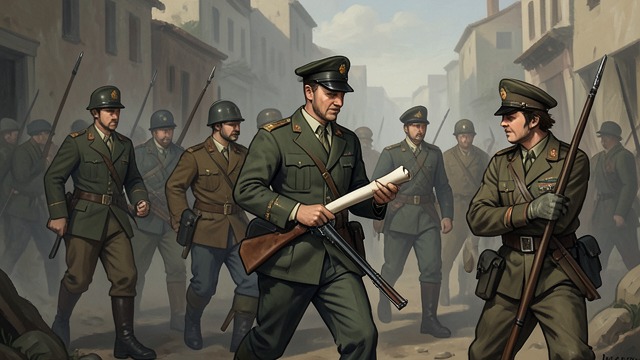
The Army Sets Out
A warning at the beginning
The first line says that a host must depart according to proper rules; otherwise its movement brings misfortune. Legge identifies both a just cause and sound discipline as possible meanings.
The opening places restraint before action.
A public test
Military strength does not by itself legitimate a campaign. The army's conduct must answer to an order higher than appetite or conquest.
The passage establishes the ethical framework for every later stage of the expedition.
One Commander Receives Trust
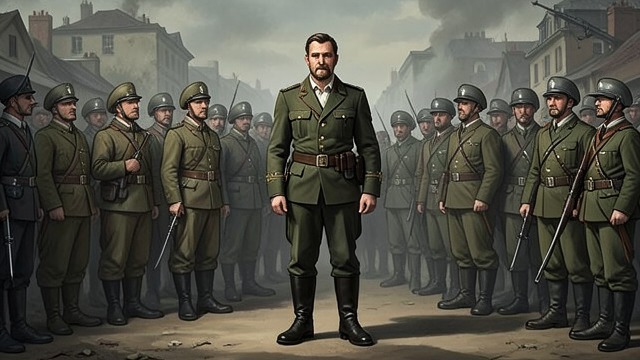
Authority in the Field
A central leader
The second line represents a strong commander positioned within the host. The king has entrusted him with command, and Legge reads the repeated charge as confidence rather than a repeated appointment.
The army's cohesion depends on authority that is clear and accepted.
Trust as discipline
The commander succeeds because he is capable and his sovereign does not divide responsibility. The passage opposes effective command to competition for honor.
Its political lesson extends beyond warfare: delegated power requires both competence and the ruler's confidence.
Rival Leaders Endanger the Host
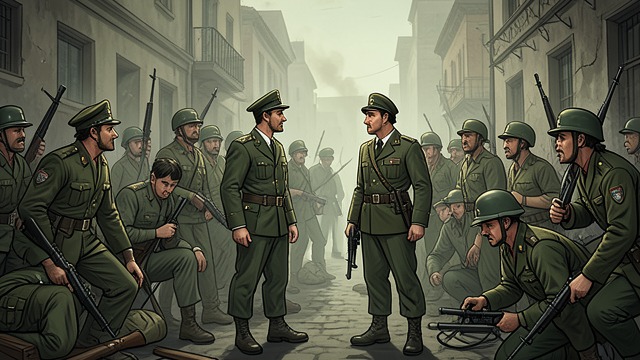
The Cost of Division
A second center of power
The third line warns that the host may acquire several ineffective commanders. Legge interprets this as a figure who leaps over the authorized leader and seeks a share of command.
The danger is not merely personal rivalry; it disrupts the army's chain of responsibility.
The campaign turns against itself
Once authority is divided, a sound plan loses force. The text predicts misfortune because the host cannot act as a coordinated body.
The crisis makes unity of command an ethical and practical condition of success.
Retreat Becomes Wisdom

A Disciplined Withdrawal
A weak position
The fourth line depicts the host in retreat. Legge explains that the position is appropriate for withdrawal: advance would expose the force to needless danger.
The line rejects the assumption that forward movement is always honorable.
Preserving the force
A retreat can be correct when circumstances make victory impossible. The absence of blame follows from judgment suited to the moment.
The military sequence therefore treats self-command as more valuable than a display of courage.
Victory Leads to Appointments

The Settlement After Battle
Defensive force and rightful authority
The fifth line portrays the ruler authorizing the destruction of attackers or plunderers. Legge sees a distinction between defensive war and aggression for loot.
The oldest son is entrusted with command; subordinate officers should not take over his role.
Reward with judgment
At the final line, a great ruler assigns territories and offices but must not employ small men in positions of trust. Victory creates new responsibilities rather than ending moral scrutiny.
The campaign's true outcome is measured by the quality of the government that follows.
At the opening of the Hosts hexagram
During the army's formation
When command is challenged
At a point of military reversal
After the campaign's success
